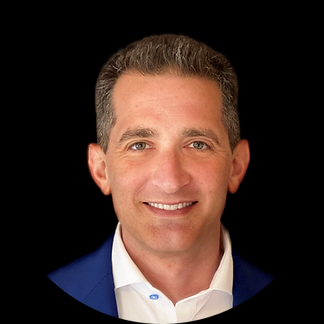
Eric Scharaga
Founder, Damen Capital
Private lender and direct land note buyer serving land investors nationwide. Featured on REtipster, Legends of Land, and Land Investing Online. LinkedIn →
The questions investors ask before they co-lend beside us, answered plainly. Minimums, what you own, payments, documents, defaults, and how you get out.
$500,000. You also need to be an accredited investor and willing to take part, meaning you review each deal and make your own decision on it. Positions are sized to the loan. Our land loans run $30,000 to $1,000,000, and you fund a share beside our own capital.
A share of one specific first lien loan. It is documented with a participation agreement, and your share is assigned to you by a partial assignment of the mortgage or deed of trust recorded with the county. It is not a unit in a fund. See what a partial assignment is and how participations, funds, and co-lending compare.
Yes. Every investor must be accredited, and we verify accredited status before your first investment.
Yes, both are common. The IRA custodian or the trustee holds the position and the payments go to that account. Your custodian will have its own paperwork and timing, so tell us early and we build the closing around it.
Our borrowers close in about 7 days from approval, so your money needs to be ready to wire inside that window. That is why the $500,000 needs to be available, not tied up.
A straight 10% a year on the money you fund, paid monthly for as long as your money is in the loan.
Borrowers pay interest only, monthly, by ACH to our in house servicing. We send your interest by ACH to the account you choose every month. No invoicing, no chasing the borrower, no spreadsheet on your end.
A promissory note and a recorded first lien mortgage or deed of trust, a participation agreement that spells out your share, servicing, and what happens on default, and a partial assignment recorded with the county that assigns your share to you. Closings run through a title company or closing attorney with a lender's title policy on every loan.
Nothing out of pocket. The borrower pays the closing fee, servicing fee, and exit fee on every loan. You receive 10% on your money; we are paid through our own share of the loan and the borrower paid fees.
First lien position on land at 65% of value or less, a borrower with 20% or more of their own cash in the property, our own money in the same loan, and your share recorded in your name with the county. We run our own valuation on every property; no borrower supplied appraisals.
We foreclose on the first lien and handle the process. Most defaulted land loans resolve at the foreclosure sale because the loan was 65% of value on day one. When no bidder shows, we take title and sell the land outright, wholesale it to our investor network, or sell it with seller financing and create a note, which is our core business. Our state foreclosure timeline table shows how long that takes in each state.
Defaults are rare and we will talk about every one of them. We do not publish performance data on a public page, but we share loan count, dollar volume, default history, and resolved outcomes directly with investors before a first investment. Ask and we send it.
Every state except California, Arizona, Nevada, New York, New Jersey, North Dakota, South Dakota, Montana, Hawaii, and Vermont.
Loans are written for 2 years, and most pay off early when the borrower resells or refinances. Plan on the full term and treat an early payoff as the upside.
There is no secondary market for a loan position, so the honest answer is not easily. In some cases we or another investor may be able to buy out a position, but there is no promise of that. Do not invest money you may need inside two years.
Any deal, any reason, no explanation needed. You see the property, our valuation, the borrower's plan, and the terms on every loan before you decide. Passing on one deal does not affect whether you see the next.
Everything an investor needs to judge us is already public. The loan program shows the rates, fees, and LTV we hold borrowers to. The buying criteria and the glossary show how we think about land as collateral. The case studies are real loans with real numbers. And the invest with us page lays out the structure and the three requirements.
If those line up with what you are looking for, the next step is a call, not a wire. eric@damencapital.com or 302-526-0200.
Fill out the short form on the invest with us page, email eric@damencapital.com, or call 302-526-0200. We walk through recent deals, the documents, and how a first investment works. No commitment until you fund a specific loan you chose.
Yes. Every deal comes with the property, our valuation work, the borrower's plan, and the terms, and we will send a sample document set before your first investment. You fund nothing until you have read what you are signing.
The invest with us page covers the requirements, a sample deal, an income calculator, how your share is recorded, and what happens on default.
Important. Participation interests are offered only to accredited investors, and accredited status is verified before any investment. This page is a summary. Any offer is made only through written offering and participation documents, which control. Any loan can default, and any investor can lose money, including all of the money invested in a loan. Our results on past loans, including loans that resolved through foreclosure, do not guarantee the outcome of any future loan. A loan position is not liquid. Do your own review, read every document, and talk to your own attorney or advisor before investing. See our Terms of Use.
The next step is a call, not a wire. Accredited, $500K minimum.
Private lender and direct land note buyer serving land investors nationwide. Featured on REtipster, Legends of Land, and Land Investing Online. LinkedIn →