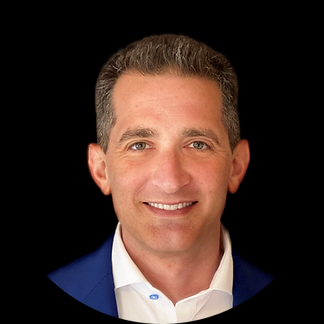
Eric Scharaga
Founder, Damen Capital
Private lender and direct land note buyer serving land investors nationwide. Featured on REtipster, Legends of Land, and Land Investing Online. LinkedIn →
By Eric Scharaga, Founder, Damen Capital · Published Sep 26, 2026 · Updated Sep 26, 2026
A subdivide deal lives or dies on the loan. Not the rate, the structure: whether the lender will release one lot at a time, how fast they do it, and how much of the purchase they will fund before the plat records. I lend on subdivides, so I am not neutral. This post compares the kinds of lenders that fund land splits, what each is good and bad at, and the questions that separate a real subdivision lender from one that has never done it.
The best subdivision lender is one that funds raw land, writes partial releases into the loan, and processes each release in days, not weeks.
Most lenders fail one of those three tests. Banks often fail the first, many hard money lenders fail the second, and plenty of lenders who say yes to both fail the third. Rate matters less than you think on a subdivide, because every lot sale pays the loan down and your balance, and your interest, shrinks as you sell.
| Lender type | Funds raw land? | Partial releases? | Speed | Best fit |
|---|---|---|---|---|
| Bank or credit union | Sometimes, with large down payments | Rarely, and slowly | Weeks to months | Long holds, strong borrower, no rush |
| Farm Credit | Yes, for agricultural use | Ask, policies vary | Weeks | Farmland that stays farmland |
| Hard money lender | Many prefer land with structures | Varies widely | Fast when they say yes | Short flips with a building on site |
| Private land lender | Yes, it is the whole business | Built into the loan | About 7 days to close | Buying, splitting, and selling lots |
| Seller carry from the parcel seller | Yes, it is their land | Only if negotiated in | As fast as the contract | Motivated sellers who will wait to be paid |
| Equity partner | Yes | Not needed, but you split profit | Depends on the partner | Deals too big for your cash |
Banks rarely fund subdivides because raw land produces no income and the value is created by paperwork they cannot underwrite.
A subdivide is raw land in, no income, and a plan to create value by recording a plat. That does not fit a bank's box. When a bank does lend on raw land, it usually wants a large down payment, full income documentation, and often a plan to build. Partial releases are rare at banks, and slow when they happen, because each release needs someone comfortable with raw land collateral and per lot payoffs. More on this in private land lender vs. bank.
Need a land loan?
$30K to $1M, as little as 20% down, no appraisal, close in 7 days. Written quote in 24 hours.
Get a Free QuoteApply NowSometimes, but many hard money lenders do not lend on raw land at all, and fewer will write partial releases.
Hard money lenders focus on real estate, but many prefer properties with structures. If you find one that funds raw land, ask about releases before anything else. A loan with no release clause means your first lot buyer's title company finds a mortgage on the whole parcel and asks for a full payoff. That kills lot by lot sales. The partial release clause is the single most important term in a subdivide loan.
Ask how releases are priced, how fast they are processed, how much they fund before and after the plat records, and what the loan costs if you sell early.
These five questions will sort lenders in one phone call:
At Damen Capital, we fund up to 80% of the purchase price if the plat records at closing, or 65% at closing plus another 15% when the plat records.
That second option matters. Many subdividers buy the parent parcel first and record the plat later. With us you get 65% of the price at closing, then a second advance of 15% when the plat records, so you are not carrying the full equity through the approval process. Loans run $30,000 to $1,000,000, for a 24 month term. See how lenders value subdivision land for how the 80% works.
Our subdivide loans are 14% interest only at $100,000 and up, 16% under $100,000, with a 2% exit fee and no points at closing.
| Cost line | Damen Capital subdivide loan |
|---|---|
| Rate | 14% at $100K and up, 16% under $100K, interest only |
| Term | 24 months |
| Closing | $600, no points at closing |
| Exit fee | 2% at payoff |
| Minimum interest | 5 months |
| Servicing | $25 a month |
| Appraisal | None |
| Releases | Partial releases as lots sell |
Because every lot sale pays the loan down, your interest drops as you sell. Price the whole project, not just the rate. What it costs to subdivide land covers the survey, plat, perc, and road costs you fund yourself.
Most land lenders, including us, fund the land purchase only, not the survey, platting, roads, utilities, or site work.
Those costs are your equity budget. We also do not fund construction, entitlements or rezoning, land you or your family will live on, parcels under 2 acres, or loans in CA, AZ, NV, NY, NJ, ND, SD, or VT. Every loan is business purpose, to an LLC or corporation.
Match the lender to your timeline first, then to how much they fund before the plat records, then compare cost.
If you have a 10 day close on the parent parcel, a bank is out. If the plat will take six months, a lender that only funds after recording means you carry the whole price yourself. If you plan to sell lots on owner financing, ask whether the lender will buy those notes too. We do, which lets one relationship cover the buy, the split, and the exit. See selling subdivided lots with seller financing.
Our subdivision loans are built around partial releases. Quote your project in 24 hours.
Get a Free Quote →A loan to buy a parcel you plan to split into lots and sell. A good one includes partial releases, so each lot can be sold with clean title while the loan stays on the rest.
Rarely. Raw land produces no income, so banks often want large down payments and a plan to build, and partial releases at banks are rare and slow.
Up to 80% of the purchase price if the plat records at closing, or 65% at closing plus 15% when the plat records. Loans run $30,000 to $1,000,000.
Typically 24 to 48 hours, depending on the county.
Usually not. We fund the land purchase only, not survey, platting, roads, utilities, or site work. Those costs are your equity budget.
Private lender and direct land note buyer serving land investors nationwide. Featured on REtipster, Legends of Land, and Land Investing Online. LinkedIn →